What oil do I put in my Road or Track Honda?

If you run a Honda as both a daily-road car and occasionally on track, oil choice becomes a balancing act: it must be good for everyday driving (cold starts, fuel efficiency, smooth idling) and tough enough for high-RPM / high-heat sessions on track


Recommended for normal road use (daily driving, commuting, UK weather)

EP3/DC5/FN2 - K20A/Z4

As a general safe baseline: a good-quality fully synthetic 5W-40 tends to strike a balance of cold-start protection (useful in UK winters) and proper lubrication once the engine is up to temperature.

In short: for a daily-driven EP3/DC5/FN2 or any derivative with a naturally aspirated K20 in the UK, 5W-40 fully synthetic is a “sweet spot.”

Oil capacity for a full oil + filter change: ~ 4.7 litres.

Recommended oil here....


FK2/FK8/FL5 - K20C1 

As a general safe baseline: a good-quality fully synthetic 0W-20 tends to strike a balance of cold-start protection (useful in UK winters) and proper lubrication once the engine is up to temperature.

In short: for a daily-driven FK2/FK8/FL5 or any derivative with the K20C1 turbocharged engine, 0W-20 fully synthetic is a “sweet spot.”

Oil capacity for a full oil + filter change: ~ 5.4 litres.

Recommended oil here....


Recommended for harder use / track days / spirited driving

EP3/DC5/FN2 - K20A/Z4

When driven hard for extended periods with high RPMs, high loads, track sessions — the demands on oil increase (higher temps, higher shear, more stress). For those conditions:

Changing the oil viscosity to a fully synthetic 5W-50 or even a fully synthetic 10W-60 is highly recommended. 

Motorsport or competition-grade oils (especially with good high-temperature stability) give extra protection under track conditions.

Recommended oil here....


FK2/FK8/FL5 - K20C1 

When driven hard for extended periods with high RPMs, high loads, track sessions — the demands on oil increase (higher temps, higher shear, more stress). For those conditions:

Changing the oil viscosity to a an Ester based competition grade fully synthetic 5W-30 or 5w/40 is highly recommended if the car sees regular track days.

Motorsport or competition-grade oils (especially with good high-temperature stability) give extra protection under track conditions.

Recommended oil here....


If you track your car, consider more frequent oil changes, since high stress and heat can degrade oil faster than in daily commuting!
Back to blog

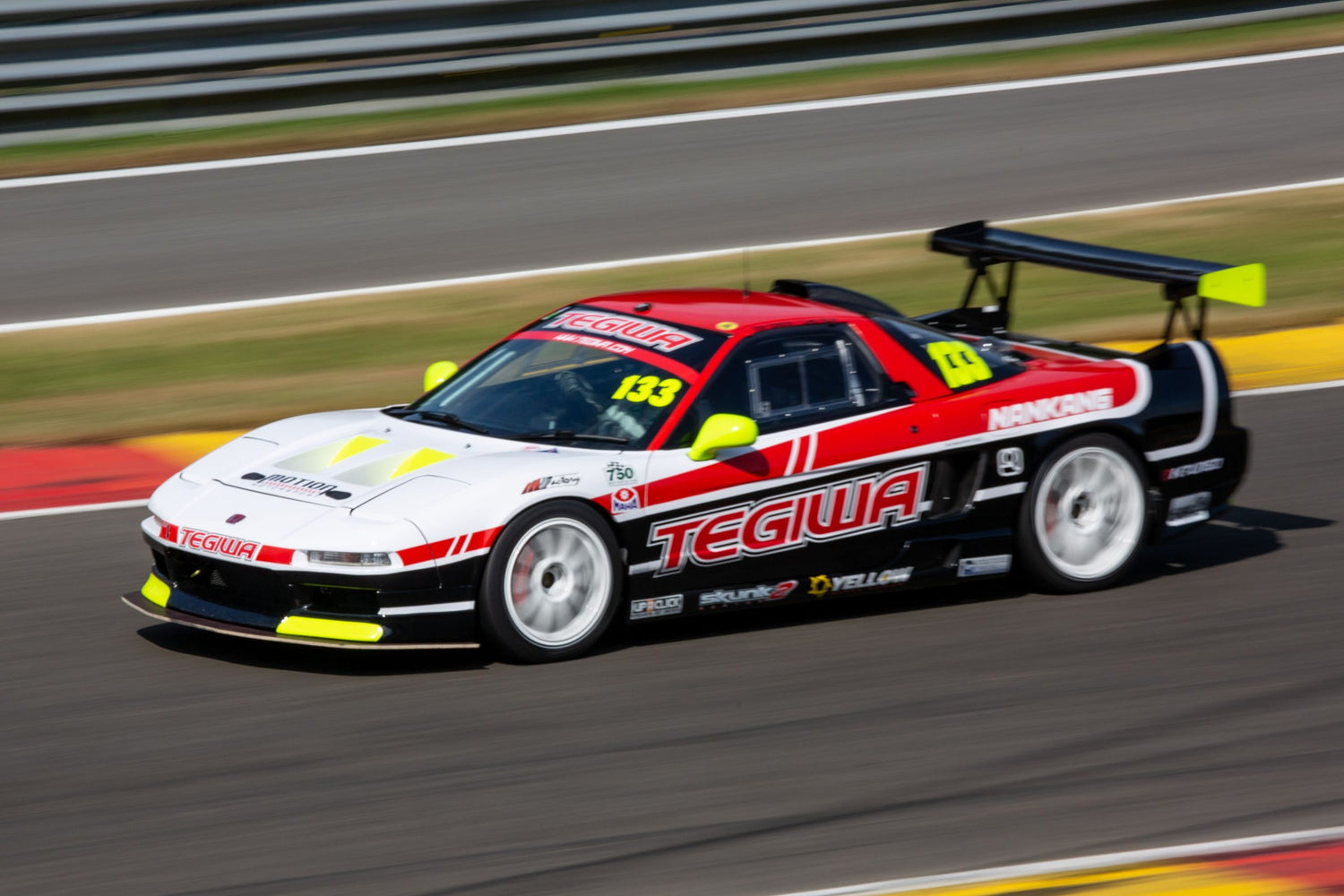
When we were approached by the guys at Tegiwa Imports with a picture of an NSX and the words ‘race car build’ being shouted through a huge grin, we immediately dropped tools, ran over and listened…

We are huge fans of retro and classic cars here at Motion and to have the opportunity to build such an iconic JDM supercar into a race car is something special, especially given that it was none other than Ayrton Senna who developed the NSX into a truly exceptional car out of the box.

NSX stands for ‘New Sportscar Unknown’ and is rear wheel drive, has a full aluminium body housing a 3.0 V6 mid-engine. The NSX was a massive project for Honda with the Formula One world Champion Ayrton Senna tasked to develop the chassis and set up of the car prior to production. Prototypes were tested extensively on the famous Suzuka Circuit and the Nürburgring with Senna’s feedback and chassis development carried through to the car that went on sale. The NSX hit the market in 1990 and was a staple of Honda’s range undergoing various revisions, a facelift and even a Targa model until production ended in 2004. It was the first production car to feature an all-aluminium body, having a total gross weight of 1370 KG which under cut its competitors; the Ferrari 348 by 130KG and the Porsche 911 964 by 100KG. The NSX was a true JDM supercar.

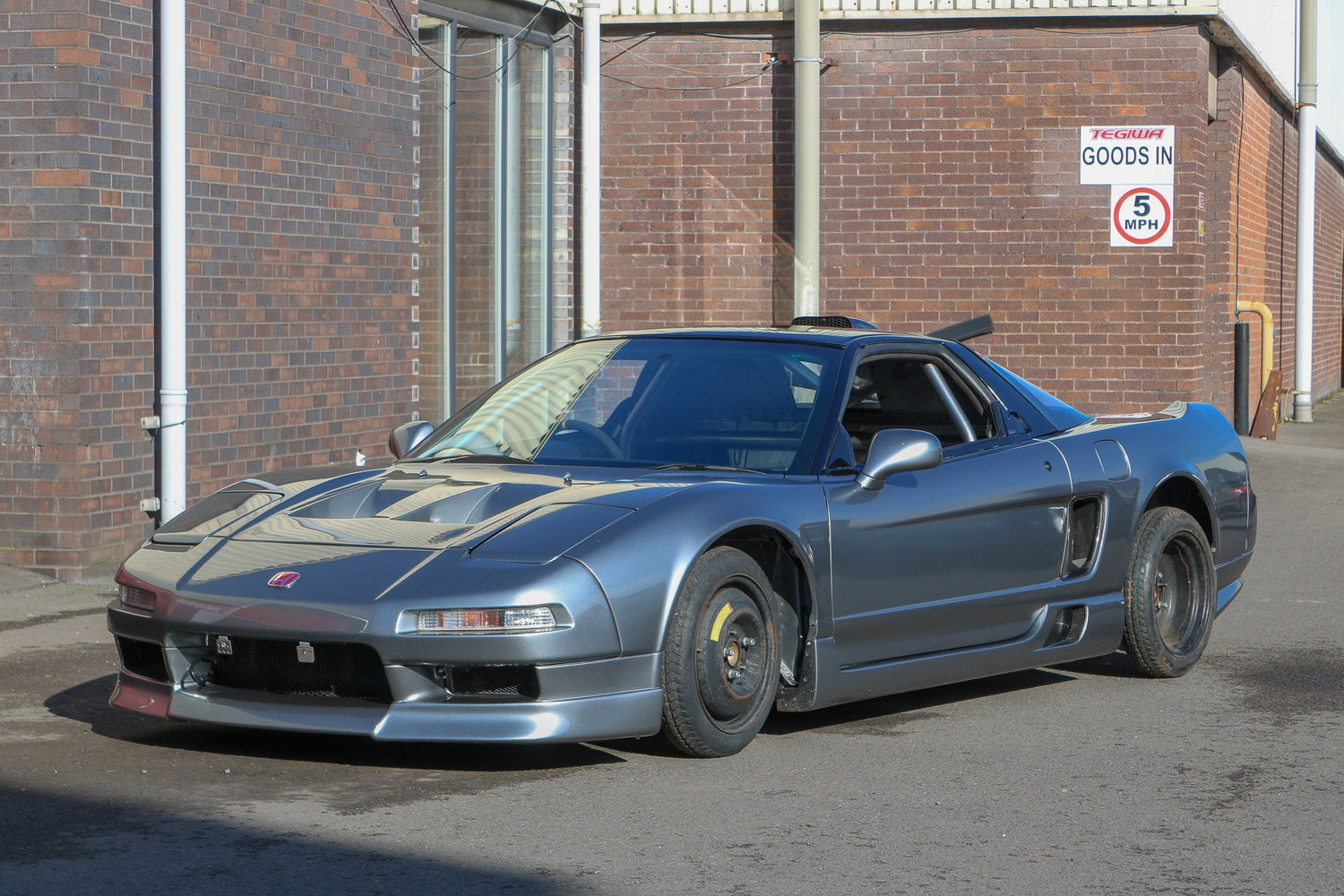
The NSX arrived at the workshop as a rolling shell, looking quite sorry for itself on a set of tiny steel wheels, but that didn’t take away from our excitement to get stuck in. The car already had a roll cage installed by the previous owner which meant that the car was already mostly stripped, saving us some work, but also giving us some problems in that we were uncertain where various loose parts and pieces that were supplied actually went. Think of it like un-boxing an Ikea flatpack set with no instructions.

We were given a deadline to build the car in time for Spa Francorchamps round of Club Enduro. Luke from Tegiwa started to organise the components and parts needed whilst we got to work on the car.

The car arrived as a bare rolling shell which meant there was a decision to be made first and foremost with the engine. As the stock V6 wasn’t present in the car and with used units being hard to find and even harder to get any real power from, the obvious answer was to use a K series engine and gearbox. The wealth of tuning options, reliability and ease of finding another should there be a failure, means that it is a no brainer whilst also helping save some weight – lovely!

The plan to use the NSX in Club Enduro means that we need to think about: additional fuel capacity, the engine conversion which calls for additional cooling support, we also need bigger brakes and ultimately need to make the car reliable. The list of parts was coming together nicely, with Luke pulling out all the stops to get some manufacturers involved that Tegiwa work closely with, making us super excited to watch the build evolve.

Engine and Gearbox

As we mentioned before, the engine of choice is a K Series. The K series is an in-line 4-cylinder Honda engine available in 2.0 and 2.4L variants. It’s found in pretty much every Honda from a Civic to an Odyssey. The variant we are using is a K24/K20 hybrid (‘Frank Motor’ in the Honda scene) which consists of a K24 bottom end and a K20 cylinder head. The engine will be mated to a 6-speed gearbox from an EP3 Civic type R with different gear ratios which we will go into more below…

Skunk2 were quick to put their hands up and help with supplying an engine once Luke had made the call and they didn’t mess about with the build spec! They upped the capacity even further to 2.45 with their Ultra conrods and Wiseco pistons, Skunk2 Ultra cams with VTEC delete, major head porting work and supporting valvetrain which means we should see 300hp plus on the Dyno. That’s a chunk up on the stock V6 along with uber K series reliability and much better options for gearing. Exciting! The engine arrived with a steel sump after being run-in on Skunk2’s engine dyno prior to being shipped to us. The first job was to change the steel oil sump pan and replace it with a cast aluminium K20 sump with the proven Clockwise drop in sump baffle to stop any oil starvation. We then fitted the K-tuned electronic water pump setup, the alternator and belt. As with any build, there are things that evolve as problems arise and this water pump and alternator setup was to be removed in favour of the stock items at a later date but, I digress.